
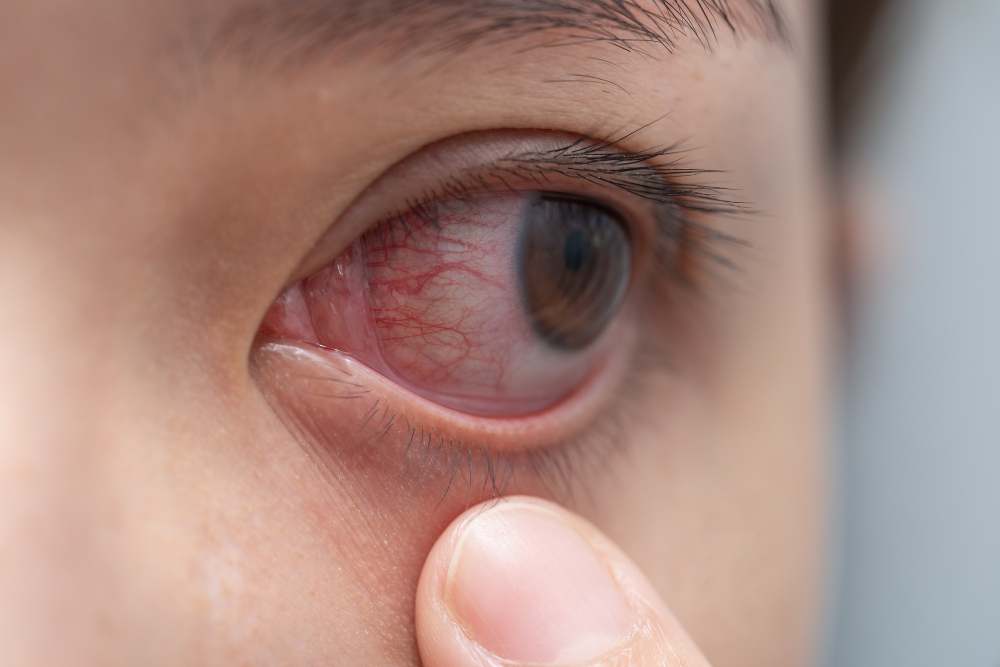
Eye allergies are a common problem for many people. These allergies can make your eyes feel itchy, red, or watery. Often, eye allergies happen when your eyes react to things like pollen, dust, or pet dander. Because eye allergies can affect your daily life, it is important to know their causes, symptoms, and how to prevent eye allergies. Understanding these basics can help you keep your eyes healthy and comfortable.
What Are Eye Allergies?
Eye allergies, also called allergic conjunctivitis, happen when your eyes react to allergens. Allergens are tiny particles that can trigger an allergic reaction. For example, pollen, dust mites, and mold are common allergens. When these particles touch your eyes, your body releases chemicals like histamine. As a result, your eyes may become red, itchy, or swollen. According to the American Academy of Ophthalmology, eye allergies are not contagious. However, they can make you feel very uncomfortable.
Common Causes of Eye Allergies
Many things can cause eye allergies. Some people react to outdoor allergens, while others are sensitive to things inside their home. For instance, you may notice symptoms during certain seasons or when cleaning your house. Below are some common causes of eye allergies:
Because these triggers are common, it is helpful to know what causes your symptoms. That way, you can avoid them when possible.
Recognizing Symptoms of Eye Allergies
Eye allergy symptoms can be mild or severe. Sometimes, symptoms appear quickly after contact with an allergen. Other times, they may build up over a few hours. For example, you may notice symptoms after spending time outdoors or cleaning your home. Common eye allergy symptoms include:
While these symptoms are common, they can also look like other eye problems. Therefore, it is important to talk to a doctor if your symptoms do not improve.
Diagnosis of Eye Allergies
Doctors can diagnose eye allergies by asking about your symptoms and medical history. Often, they will examine your eyes to check for redness or swelling. Sometimes, doctors may ask if you have other allergies, such as hay fever or asthma. In some cases, they may suggest allergy testing. For example, a skin test can help find out what causes your allergic reaction. According to the Centers for Disease Control and Prevention (CDC), early diagnosis can help you manage symptoms better and avoid triggers.
Prevention Tips for Eye Allergies
Preventing eye allergies is possible with a few simple steps. Because many triggers are hard to avoid, it helps to know how to prevent eye allergies in daily life. Try these tips to reduce your risk:
Because prevention is key, these steps can help you avoid many common triggers.
Lifestyle Guidance for Managing Eye Allergies
Living with eye allergies can be easier with a few lifestyle changes. For example, you can use cold compresses to soothe itchy eyes. Over-the-counter allergy eye drops may also help, but always check with your doctor first. If you wear contact lenses, consider switching to glasses during allergy season. Additionally, keep your home clean to lower your exposure to dust and pet dander. According to the World Health Organization (WHO), managing your environment is one of the best ways to control allergic conjunctivitis causes. By making these small changes, you can enjoy clearer, more comfortable eyes every day. Take the first step towards better health. Consult Dr. Sandeep Saildesai for personalised care